Securing reliable pest control services Columbus homeowners rely on stops active structural damage and biological contamination before colonies spread through insulation and subflooring. Franklin County properties face severe seasonal pressures, from damp subterranean termite swarms along river corridors to aggressive house mouse migrations when autumn temperatures drop below 32 degrees Fahrenheit.

A professional pest control services company in Columbus is an environmental management provider that inspects properties, removes active infestations, and applies forensic exterior exclusion barriers across Franklin County structures.
Every service reflects the same meticulous attention to detail, whether it's a single job or a larger pest control services project across Columbus.
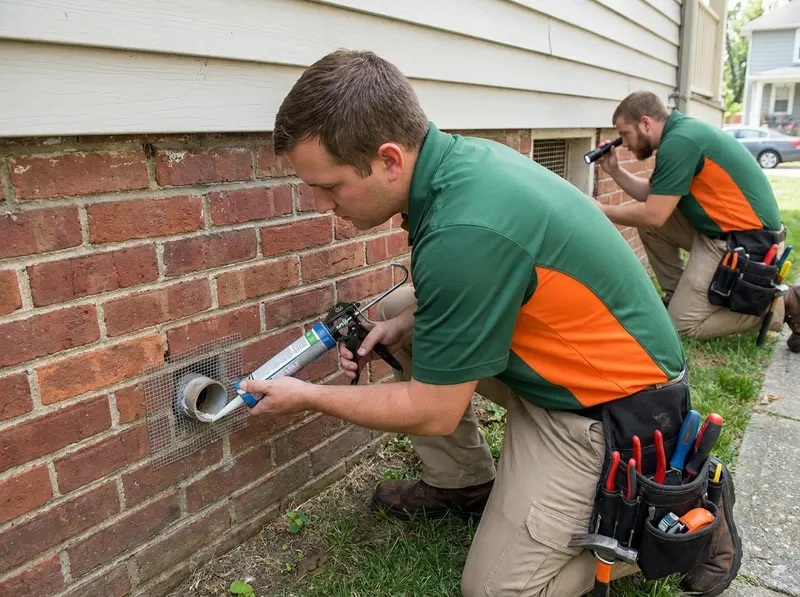
Suburban properties frequently experience indoor incursions of Mus musculus (house mouse) and Rattus norvegicus (Norway rat) once nighttime temperatures drop below freezing in late autumn. Technicians systematically survey foundation footings, masonry joints, utility penetrations, and garage door weather seals to map active pathways. Entry points larger than a quarter-inch are sealed using heavy-gauge copper mesh, galvanized steel hardware cloth, and elastomeric silicone sealants. Mechanical trapping protocols inside attics, drop ceilings, and crawl spaces clear nesting individuals within 72 hours without utilizing airborne toxic baits that risk secondary poisoning to domestic pets or indoor carcass decay behind structural walls.
Get a quote →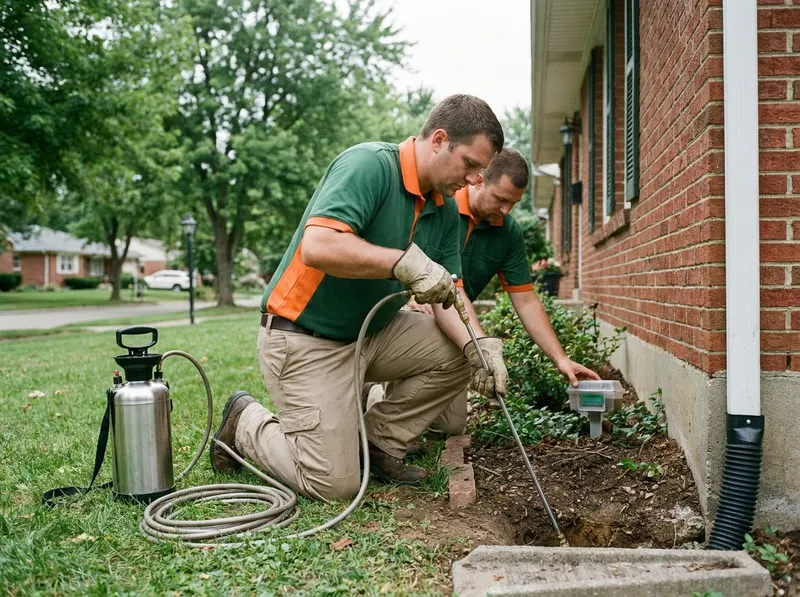
Eastern subterranean termites (Reticulitermes flavipes) cause silent structural devastation to floor joists, sill plates, and framing studs across Franklin County. Treatments deploy non-repellent liquid termiticides trench-applied directly into the soil along foundation perimeters at the labeled rate of 4 gallons per 10 linear feet. Foraging workers cross the treated zone without detection, transferring the active insect growth regulator throughout the subterranean colony to arrest molting and collapse the reproductive queen. In properties with finished patios or stone masonry, precision slab injection delivers subterranean protection directly beneath structural concrete without destabilizing foundation soil.
Get a quote →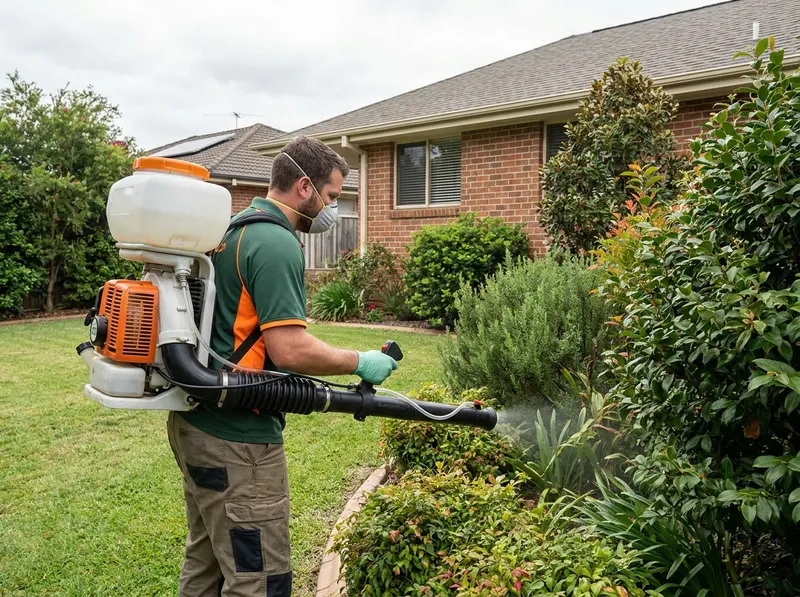
Humid summer conditions running from June through August trigger rapid population surges of Culex and Aedes mosquitoes in Central Ohio backyards. Precision backpack misting directs ultra-low-volume droplets to the undersides of broadleaf foliage, perimeter shrubbery, ornamental ground cover, and shaded soffits where adult mosquitoes rest during daylight hours. Applications integrate synthetic pyrethroids with juvenile insect growth regulators, disrupting reproductive life cycles for 21 to 30 days while leaving non-target plant life unharmed. Standing water zones receive granular microbial Bacillus thuringiensis israelensis larvicides to eliminate developing wrigglers before adult emergence.
Get a quote →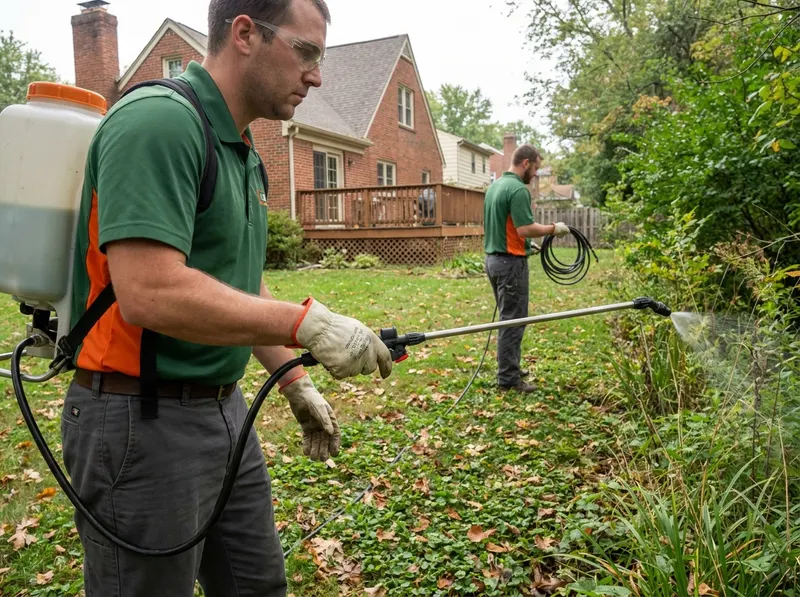
Ixodes scapularis (blacklegged tick) and Dermacentor variabilis (American dog tick) inhabit high-grass transitions, leaf litter, and residential property perimeters bordering wooded parcels. Specialized barrier applications create an impenetrable 10-foot perimeter buffer along property lines, fence rows, and shaded garden margins. Granular or liquid acaricides eliminate questing ticks on contact, preventing disease transmission such as Lyme disease and Rocky Mountain spotted fever to pets and family members. Treatments coincide with spring nymph activity peaks in May and secondary adult questing periods across September and October.
Get a quote →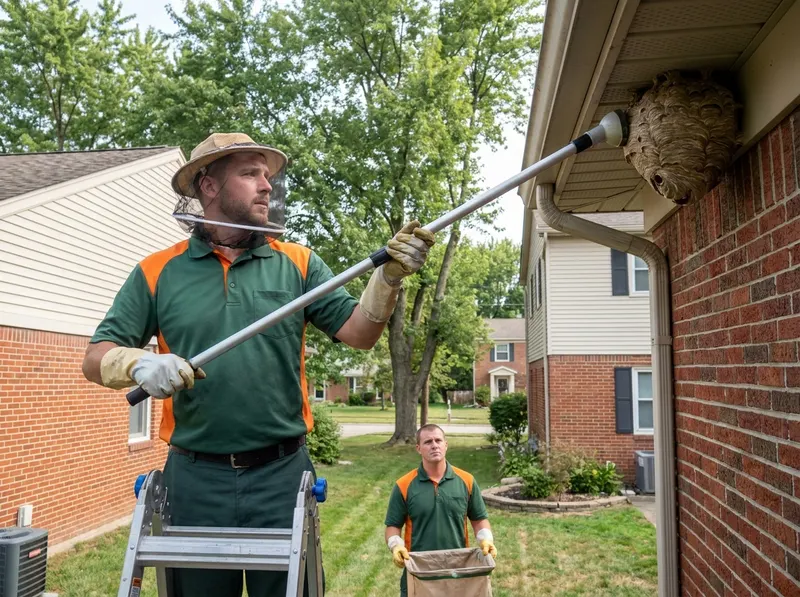
Vespula yellowjackets, Dolichovespula maculata (bald-faced hornets), and Polistes paper wasps construct defensive nests under eaves, behind vinyl siding, or subterranean cavities throughout midsummer and early fall. Technicians utilize targeted pressurized insecticidal dusts and freezing aerosol agents to neutralize active colonies instantly at the nesting core. Nests are mechanically removed, and residual structural entry voids are treated with repellent dusts to eliminate chemical aggregation pheromones that attract secondary queens seeking future overwintering harborages.
Get a quote →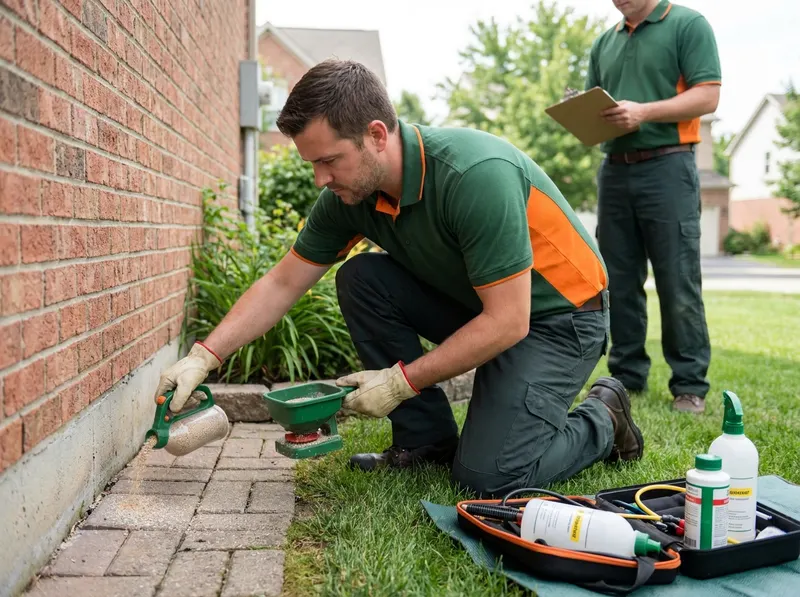
Engineered for sensitive indoor residential environments containing infant children, elderly residents, or exotic pets, this protocol replaces broad-spectrum interior sprays with precision placement strategies. Technicians utilize targeted bait matrices for blattids and formicids, vacuum extraction methods for active aggregations, and botanical dust formulations containing silicon dioxide and essential plant oils within electrical chases and plumbing walls. The focus remains 90 percent exterior perimeter exclusion, denying pests physical ingress while maintaining sterile interior air quality with zero off-gassing synthetic residues.
Get a quote →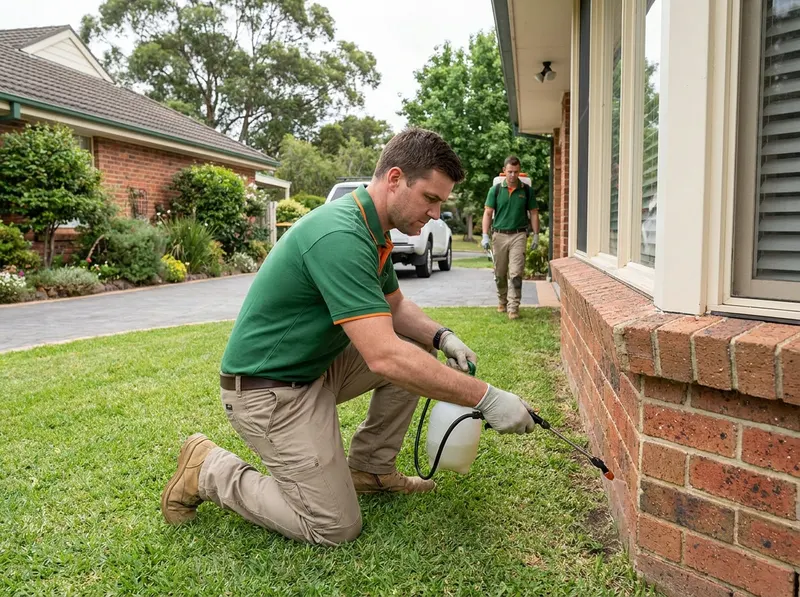
Continuous residential perimeter defense prevents seasonal migrations of subterranean ants, boxelder bugs, brown marmorated stink bugs, and centipedes from breaching the building envelope. Scheduled service every 90 days establishes an unbroken three-foot vertical and three-foot horizontal micro-encapsulated liquid band around the foundation masonry. Exterior window frames, door thresholds, vents, and utility conduits receive focused crack-and-crevice treatments, combined with de-webbing sweeps up to 20 feet high to remove spider harborages and egg sacs before structural colonization.
Get a quote →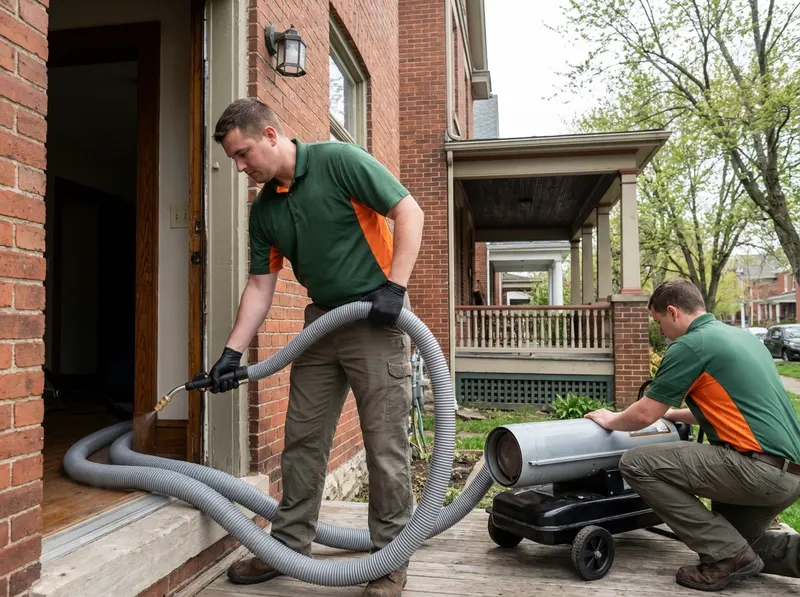
Cimex lectularius infestations demand lethal thermal remediation combined with high-grade synthetic desiccant powders for absolute eradication. Commercial convective thermal heaters elevate ambient indoor temperatures within targeted living areas to a lethal threshold between 122 and 135 degrees Fahrenheit, sustaining this level for 4 hours to penetrate deep within box springs, baseboards, and interior wall voids. This process eliminates all life stages, including heat-resistant eggs, within a single service visit without requiring homeowners to discard valuable furniture or upholstered bedding.
Get a quote →You get a firm, itemized quote for your pest control services before any work begins, no surprises, no pressure.
Careful prep, tidy work, and a full cleanup when we are done. We treat your home and belongings like our own.
The same trusted, background-checked team from the first call to the final check.
Selecting an appropriate residential intervention depends on structural vulnerability, insect biology, and perimeter pest density. If a property experiences scratching within drywall, gnawed electrical sheathing, or visible droppings in crawl spaces, full mechanical rodent exclusion is required; if an infestation involves scattered surface foragers such as pavement ants or camel crickets, targeted perimeter micro-encapsulated spray barriers suffice. The operational trade-off centers on upfront physical labor versus recurring chemical maintenance: mechanical exclusion demands structural sealing of sill plates, weep screeds, and roofline mortar joints that permanently prevents entry, whereas barrier sprays require scheduled quarterly re-applications every 90 days to maintain active chemical efficacy against crawling arthropods.
Homeowners balancing tick and mosquito control against ecological considerations should weigh botanical barrier options against synthetic pyrethroids. Essential oil formulations utilizing cedarwood and rosemary offer an acute knockdown window of 14 to 21 days with zero aquatic or pollinator soil persistence, whereas standard synthetic micro-encapsulated pyrethroids sustain 28 to 35 days of rainfast defense through humid Columbus precipitation patterns. Properties adjacent to heavy river moisture, such as those bordering the Scioto River or Olentangy River corridors, necessitate localized granular larvicide dunks in standing water traps alongside exterior misting, ensuring biting vectors are eliminated at larval instars before airborne dispersal into outdoor recreational zones.
Every project gets a firm, written price after a free on-site visit. Ranges below for orientation.
Tell us about your pest control services job and we'll send a clear, written quote, usually the same day. Or just call and talk to a real Columbus pro.
(380) 267-1530
Properties throughout Clintonville and Victorian Village feature century-old sandstone and fieldstone rubble foundations that naturally shift over time, creating mortar expansion gaps that serve as open conduits for subterranean mice, brown house spiders, and carpenter ants. Furthermore, residential parcels near the Scioto Mile Promenade and the Olentangy River basin experience sustained seasonal atmospheric moisture, driving aggressive spring subterranean termite migrations and intensive midsummer Culex mosquito hatch rates across shaded residential river corridors. Structural protection in Franklin County requires understanding these specific regional soil compositions, historic brick masonry tolerances, and seasonal river valley pest emergence cycles.
Free estimates for Columbus & the surrounding area.
 Kelmar Pest Services